Artificial Intelligence in Agriculture: Transforming Farming, Food Security and Rural Opportunities
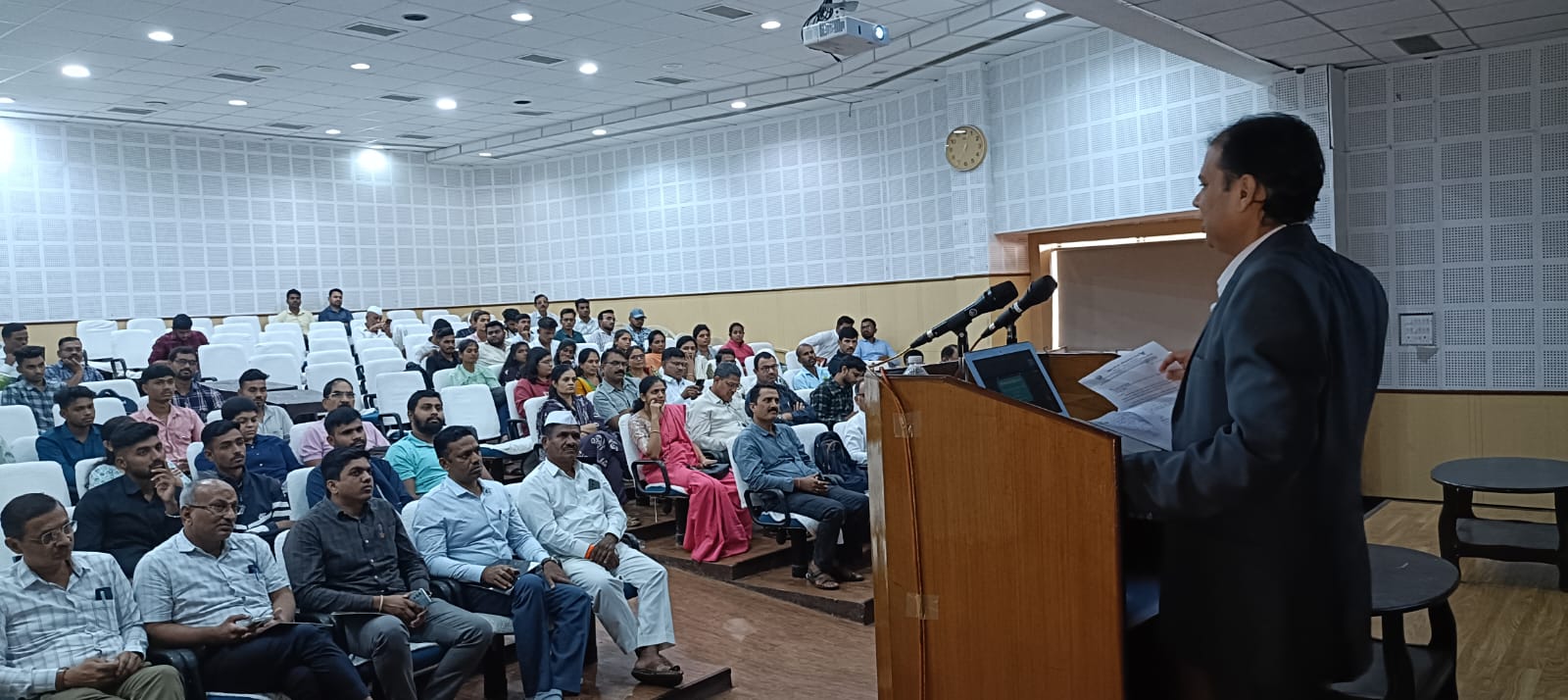
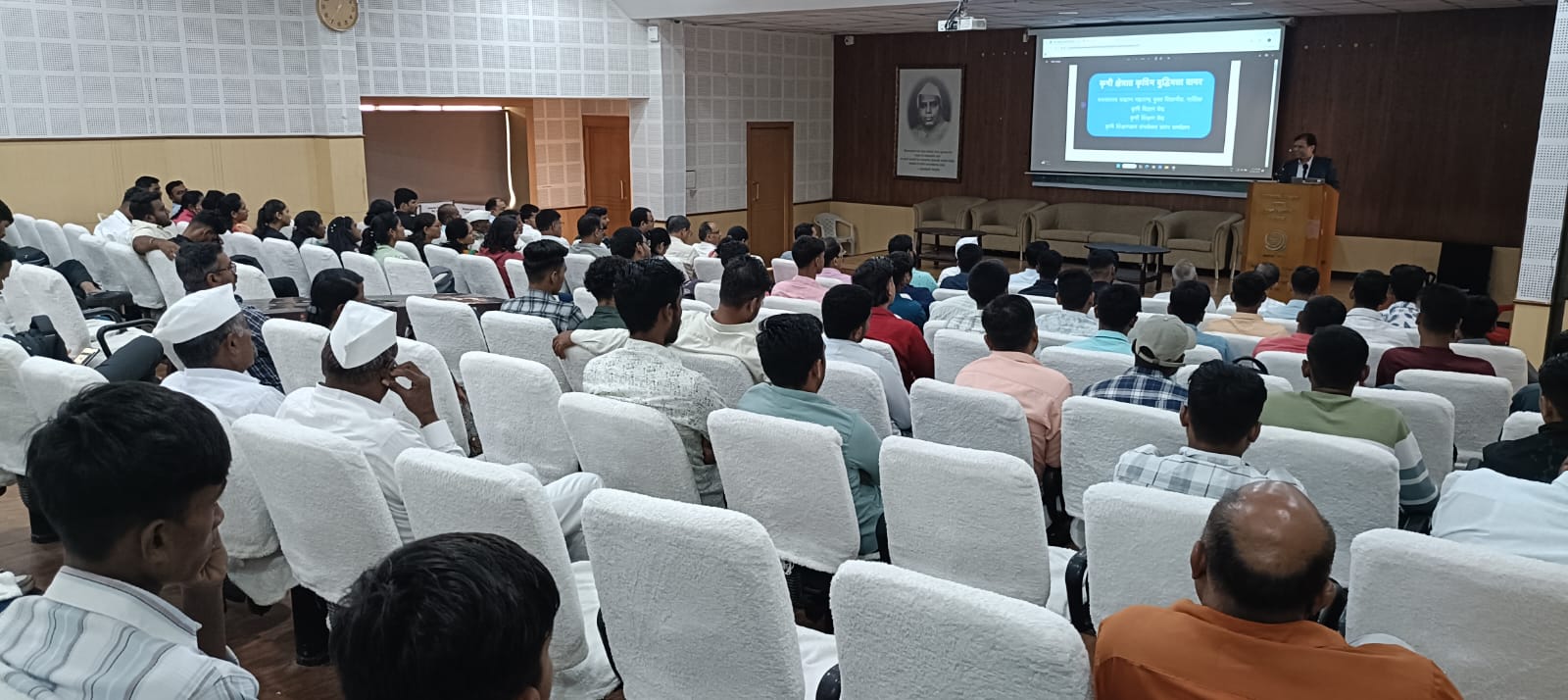
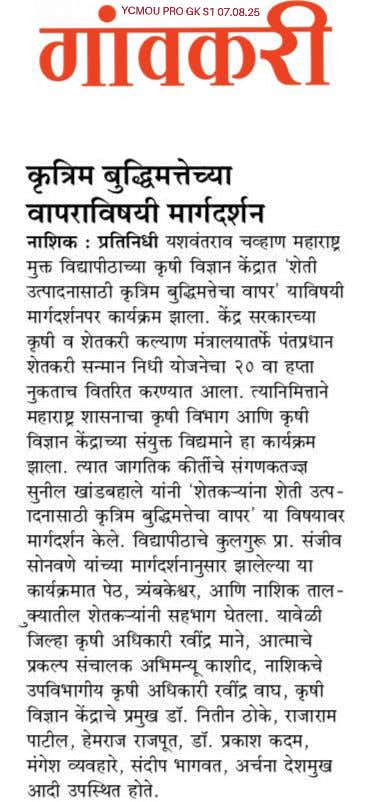
Earlier this week, I had the privilege of delivering a keynote address at a special program organized by Yashwantrao Chavan Maharashtra Open University (YCMOU), in collaboration with the Krishi Vigyan Kendra (Agriculture Science Centre) and the Department of Agriculture, Government of Maharashtra.
The event, titled “Use of Artificial Intelligence for Agricultural Productivity”, brought together farmers from Peth, Trimbakeshwar, and Nashik talukas, along with agricultural officers, educators, and researchers.
The program was held in the backdrop of the Government of India’s 20th installment of the Pradhan Mantri Kisan Samman Nidhi scheme, aiming to connect technology, policy, and grassroots agriculture.
From Stone Tools to Smart Farming: A Historical Journey
I began my talk with a story — imagining an ancient farmer tilling soil with a stone tool. Over thousands of years, agriculture has evolved through the plough, irrigation canals, tractors, and mechanization.

Parallel to this, the world witnessed the birth of computers in the 1940s, Alan Turing’s famous question “Can machines think?”, the rise of DARPA’s AI research, the internet, IoT, Big Data, Machine Learning, and now — Artificial Intelligence (AI).
Today, AI is not just a buzzword. It is the next agricultural revolution, with the potential to make farming more precise, predictive, and profitable.
What AI Really Means for Farmers?
In simple terms, Artificial Intelligence is about giving machines the ability to “think” and “decide” like humans — but using vast amounts of data.
In agriculture, this means:
- Predicting pest and disease outbreaks before they happen.
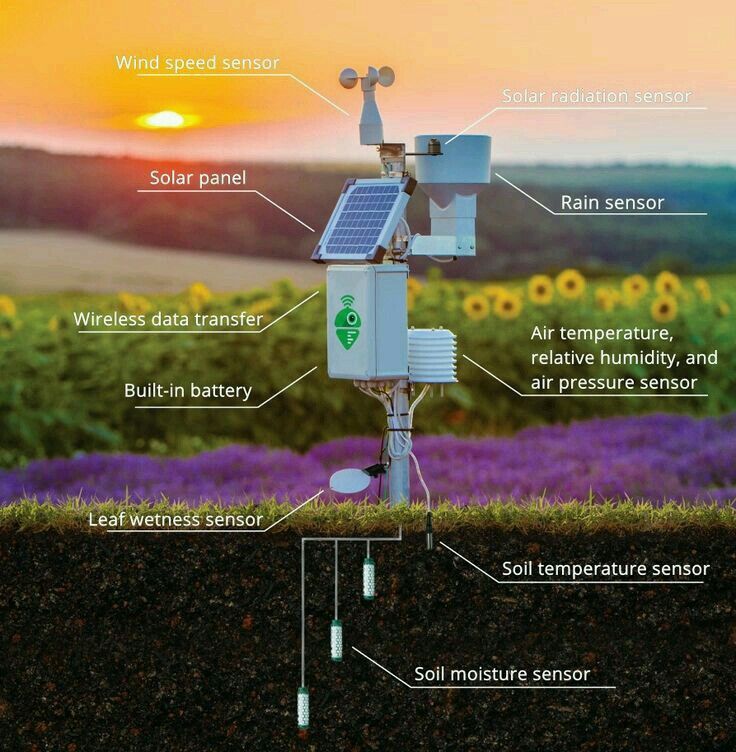
- Managing irrigation with sensor-driven precision.
- Advising farmers on the right crop at the right time.
- Forecasting market prices to optimize profitability.
This isn’t theory — it’s already happening in Netherlands (climate-controlled greenhouses), Israel (smart drip irrigation), USA (self-driving tractors), and China (AI-powered precision farming with drones and satellites).
India’s AI Agriculture Movement
India is making rapid strides in AI-driven farming.
Startups like Fasal, CropIn, AgNext, and DeHaat are enabling farmers to:
- Monitor crop health via satellite and drone imagery.
- Detect pests using smartphone apps.
- Automate irrigation based on real-time soil nutrient data.
- Predict market trends to plan sales better.
In my talk, I shared how AI can be applied across all three crop stages:
- Pre-sowing – Soil analysis, crop planning.
- Growth stage – Pest/disease monitoring, irrigation control.
- Harvest stage – Yield estimation, market linkage.
AI: Not a Job Killer, but a Job Creator
One of the myths I addressed was that AI will take away jobs.
On the contrary, it creates new types of rural employment:
- Agri Data Scientists
- Drone Operators
- AI-powered Agri Advisors
- Digital Krishi Mitras
With training and awareness, rural youth can find global opportunities without leaving their villages.
Challenges and Solutions
Yes, there are barriers:
- Limited digital literacy.
- Patchy internet connectivity.
- Lack of localized AI tools.
But there are also solutions:
- Mobile apps in local languages.
- On-ground training programs.
- Public–Private partnerships and CSR initiatives.
Why This Matters Now?
The global population is racing toward 10 billion by 2050.
Food security will be one of the defining issues of our times.
AI in agriculture is not just about efficiency — it’s about ensuring every person has enough to eat while making farming sustainable and profitable.
A Positive Vision for Indian Agriculture
As I told the audience:
“Machines are not our enemies. With the right knowledge and direction, AI can become the farmer’s most trusted friend.”
AI in agriculture represents India’s second Green Revolution — one driven by data, connectivity, and innovation.
With the combined energy of policymakers, technologists, educators, and farmers, India can become the food provider to the world — while giving rural youth a future filled with dignity, innovation, and prosperity.
Event Highlights:
- Organizer: YCMOU – Krishi Vigyan Kendra, Nashik
- Supported by: Govt. of Maharashtra, Department of Agriculture
- Occasion: 20th installment of PM Kisan Samman Nidhi
- Audience: Farmers, agricultural officers, educators, students
- Speakers & Guests: District Agriculture Officer Ravindra Mane, ATMA Project Director Abhimanyu Kashid, Sub-Divisional Agriculture Officer Ravindra Wagh, Dr. Nitin Thoke, and other dignitaries.

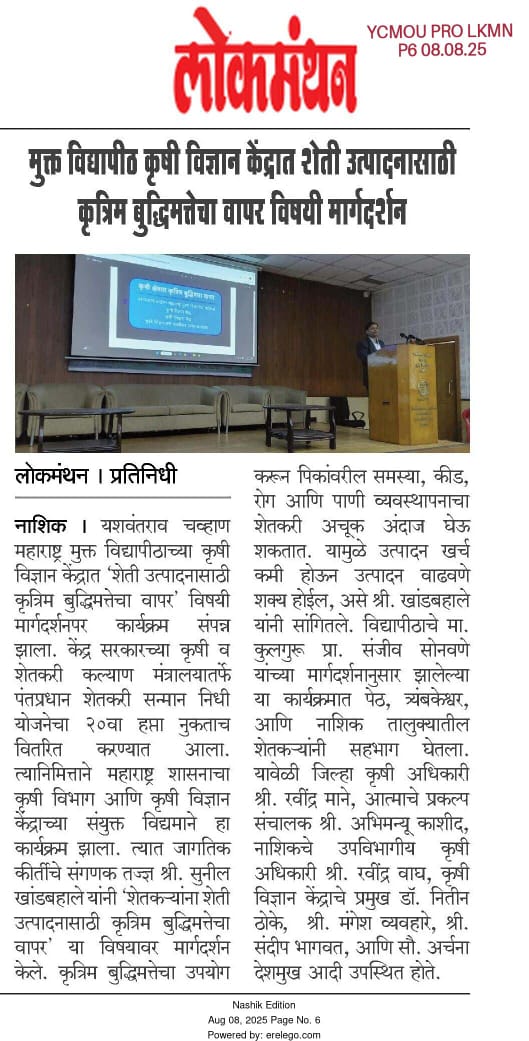
I’m grateful to the organizers for inviting me and to every farmer who participated with curiosity and enthusiasm. This was not just a discussion about technology — it was a conversation about the future of food, farming, and the rural economy. Let’s continue the dialogue on how technology can empower those who feed the world.