Why Spirituality Matters in the Age of AI: Reflections from the Maharashtra Varkari Golmej Parishad
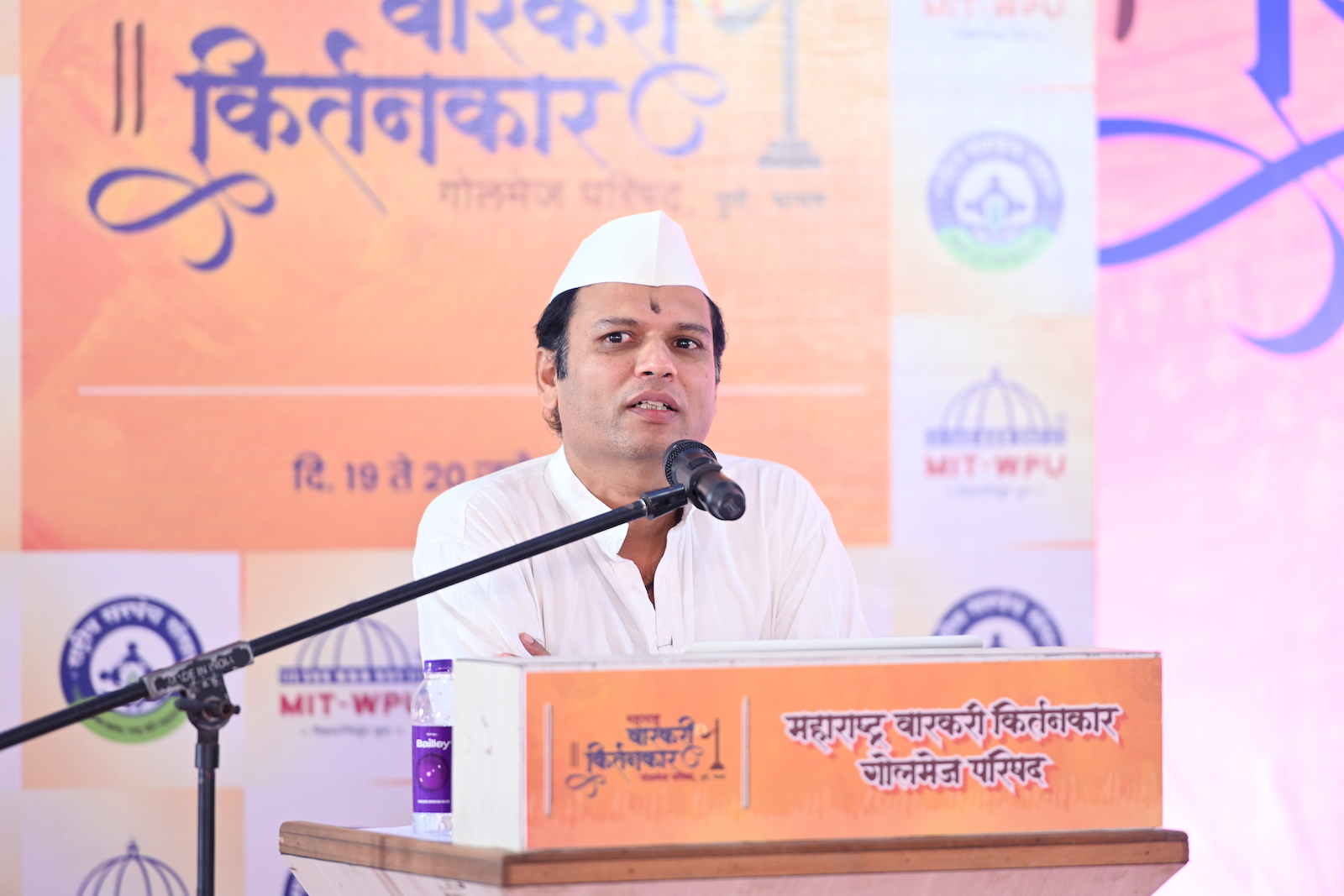
When I walked into the MIT School of Education campus at Shri Kshetra Alandi for the Maharashtra Varkari Kirtankar Golmej Parishad in July 2025, I didn’t just step into a conference — I stepped into a living confluence of India’s timeless wisdom and its restless present.
More than 250 participants had gathered — sarpanchas, kirtankars, pravachankars, spiritual leaders, educators, thinkers, and youth. The theme was bold, urgent, and rare: “Varkari Sampradayachi 21vya Shatakatil Samajik Prabodhanachi Disha, Swaroop ani Vatchal” — a deep dive into how an ancient spiritual tradition could offer answers to today’s toughest social challenges.
I was invited to deliver the keynote speech on “The Nature and Challenges of 21st Century Social Problems.” But before I spoke, I spent weeks listening — not just to scriptures and books, but to people. I had conversations with over 30 experts — spiritual teachers, educators, social workers, and AI researchers — asking them what worries them about today’s world. Their insights helped shape the direction of my talk, and I would now like to reflect on what I learned and shared.
The Problem We Don’t Talk About Enough
We live in a time of miracles and mess. We can talk to someone across the globe in seconds, yet struggle to speak to ourselves. We can generate art and music using AI, but often lose our inner rhythm. We carry smart devices, but not always wise decisions.
At the heart of it all lies a quiet crisis — the spiritual disengagement of our youth. It is one of the most under-discussed, yet foundational issues of our time.
When I say “spirituality”, I don’t mean rituals or blind faith. I mean that inner compass, the sense of purpose, the clarity between right and wrong, the grounding force that helps us not just exist, but live meaningfully.
Why are so many young people turning away from this spiritual grounding? The reasons are many:
👉 They find spirituality outdated or irrelevant.
👉 They don’t understand the language of saint literature.
👉 They’re overwhelmed by a fast-paced, competitive lifestyle.
👉 They trust Google more than Guru.
👉 And in many cases, no one has truly invited them into that world of reflection and wisdom.
What I Heard from the Ground
During the Parishad, many sarpanchas and kirtankars from across Maharashtra confirmed these patterns. They’ve seen youth in their villages drift toward mental stress, social media addiction, and moral confusion. They shared stories of brilliant young minds collapsing under pressure, or becoming disillusioned with leadership, education, and religion.
But amidst the worry, there was also hope.
They shared how even one meaningful conversation, one bhajan session, or one exposure to saint literature could re-ignite a sense of direction in a young life. They spoke of the magic that happens when a child truly feels the words of Sant Shri Dnyaneshwar Mauli, Sant Shri Tukaram Maharaj, or Sant Shri Namdev Maharaj — not as history, but as a living presence.
It became clear: The youth aren’t rejecting spirituality. They just haven’t experienced it in a way that speaks their language.
The Spirituality-AI Paradox
As someone who works with Artificial Intelligence and also studies spiritual systems, I posed a provocative question in my talk:
Can AI learn ethics from Sant Sahitya?
It might sound futuristic — but think about it.
AI is not magic. It learns from the data we feed it. If we feed it biased, violent, or shallow data — it becomes a dangerous tool. But what if we trained AI on values? On Abhangs? On Vivek? What if we designed algorithms that respected life, not just patterns?
I proposed a new idea: a Spiritual Data Strategy — where we digitize, translate, and structure the ethical wisdom of our saints and sages and make it available not just to AI developers, but to every curious mind.
Imagine an app where you ask a moral question and it responds with contextual guidance from Tukaram. Or a chatbot that teaches kids the meaning of Haripath in their mother tongue. It’s not science fiction. It’s a matter of priority.
Bringing Back the Guru in Our Villages
Technology is powerful, but it is not a substitute for presence. That’s why I believe we need Panchakroshi Gurukuls — small, localized centers of moral and spiritual education. Places where kids can learn Abhangs not for marks, but for meaning. Where youth can talk about their dilemmas and find guidance not from motivational quotes, but from real wisdom.
I proposed that every kirtankar, every pravachankar, and every educator take a village or ward under their care — as a living experiment in value-based leadership.
This is how traditions survive — not just by remembering them, but by re-living them.
A Movement, Not Just a Moment
The Parishad was not just an event. It felt like a movement in the making.
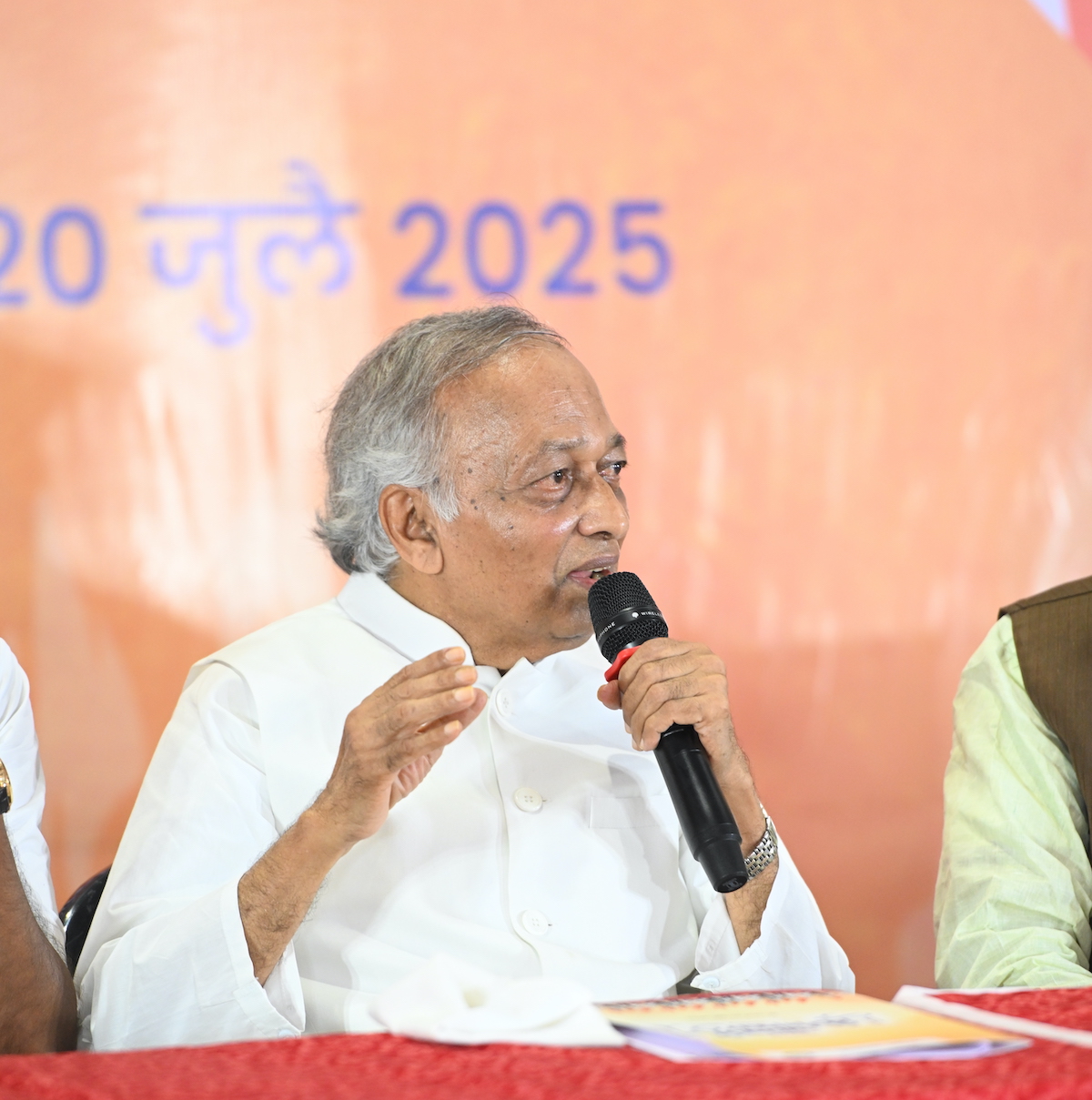
We were blessed with the presence of visionary leaders — Dr. Vijay Bhatkar Sir, whose spiritual clarity equals his scientific genius; Dr. Sadanand More, a thinker who breathes Sant literature; Dr. Yashodhan Maharaj Sakhare, a spiritual pillar; and of course, the dynamic Dr. Rahul Karad of MIT-WPU, who understands that peace and progress must go hand-in-hand.
Their presence reminded us that spirituality is not backward. It is forward-looking — if we choose to carry it that way.
What’s Next?
I left the event with one powerful insight:
“The world is not suffering from lack of intelligence. It is suffering from lack of introspection.”
If we can give our youth tools to think deeply, to act wisely, and to live with inner clarity — we can solve most of the world’s crises before they explode.
So let us build those tools:
- Digital platforms that teach values.
- AI systems guided by ethics.
- Schools that include local spiritual traditions.
- Villages that become labs of human potential.
My Gratitude
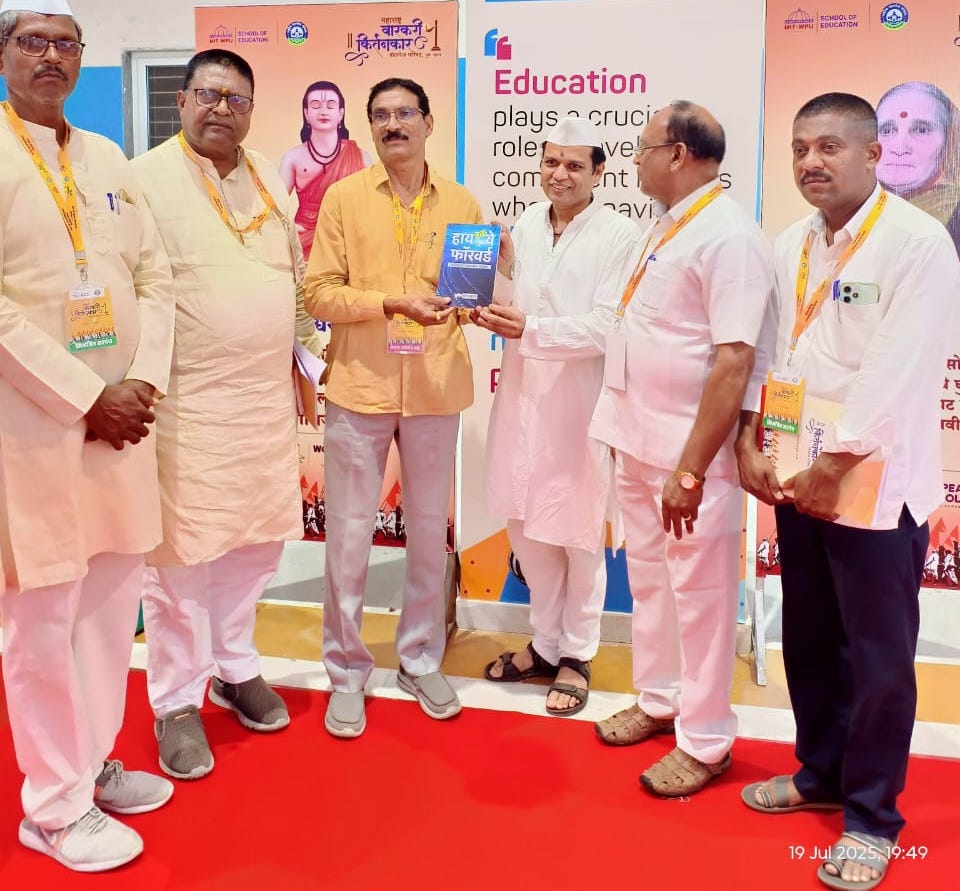
I want to thank the organizers of this remarkable Parishad for their vision and inclusivity. Special gratitude to MIT-WPU, Dr. Yashodhan Maharaj Sakhare, Dr. Rahul Karad, and all the spiritual and academic leaders who made this possible.
Most importantly, I thank the audience — the kirtankars, sarpanchas, students, and seekers — who asked bold questions, shared honest feelings, and opened their hearts. Your participation proved that Maharashtra’s moral spine is still strong.
A Final Thought
Let’s not just digitize our traditions.
Let’s breathe life into them, with fresh eyes and faithful hearts.
Let’s not just protect Sant Sahitya — let’s live it, every day, in our decisions, our speech, and our code.
Because one day, when AI asks us what makes humans worth preserving,
we should be able to point to a Sant,
an Abhang,
and say — “This.”
Hari Om Tatsat.